Houston's Columbia Tap Trail Is Getting $7.5 Million in Upgrades — Here's What That Means for Nearby Buyers
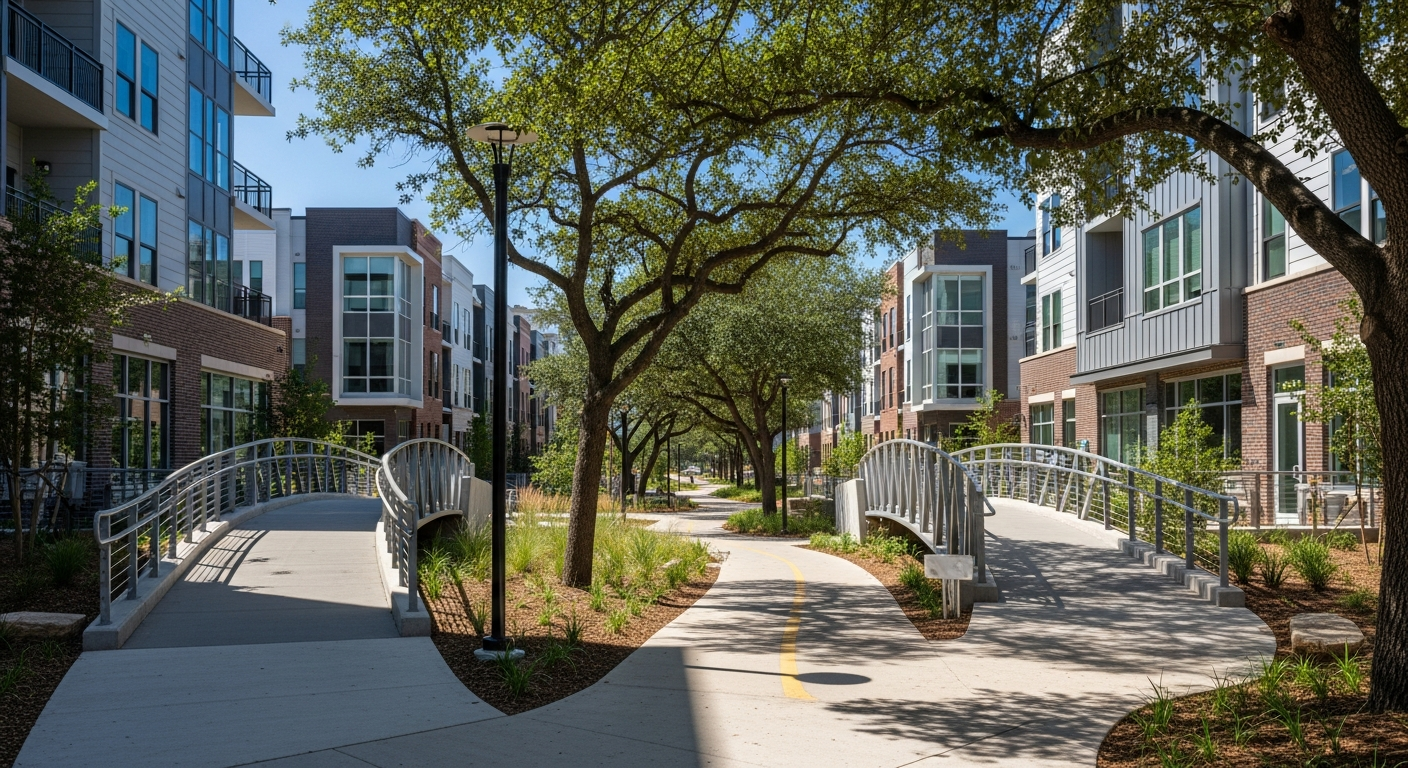
A $7.5 million improvement initiative just launched on the Columbia Tap Trail, a four-mile public trail running through Third Ward, East Downtown, and beyond. If you're buying, selling, or simply watching what's happening in these neighborhoods, this post breaks down what's being built, when, and why it matters to your decision.
Phase 1 is already underway, and over 300 solar-powered lights are going in along all four miles of the trail right now. That's not a rendering or a city council vote — crews are on the ground.
Public infrastructure investment of this scale tends to move quietly until it doesn't. By the time a neighborhood trail shows up on every buyer's wishlist, the window on entry pricing has usually already closed. The Columbia Tap Trail is worth paying attention to now, before that happens.
Context
The Columbia Tap Trail is a four-mile public trail that connects Third Ward, East Downtown (EaDo), Texas Southern University, and Shell Energy Stadium. At its southern end, it ties into the 16-mile Brays Bayou Trail system, which runs all the way to Hermann Park and the Museum District. That's a meaningful amount of Houston connected by foot and bike.
The trail has deep roots. It follows the exact route of the Houston, Tap, and Brazoria Railway, a line chartered in 1856. That railway was built by enslaved Black men and used to haul sugar and cotton from Brazoria County plantations to the Port of Houston. Future phases of the improvement project will add heritage signage that acknowledges that history directly — not as a footnote, but as part of the trail's identity.
That context matters for understanding the neighborhoods around it. Third Ward is one of Houston's most historically significant Black communities. EaDo has seen rapid development pressure over the past several years. TSU remains an anchor institution. These aren't interchangeable zip codes — they're distinct places, and the trail threads through all of them.
What's Actually Being Built
Here's what the $7.5 million initiative includes, broken into phases:
Phase 1 — launching now:
- More than 300 solar-powered lights installed along the full four miles of trail
- First installations timed ahead of the World Cup (Shell Energy Stadium is one of the host venues)
Future phases through 2027:
- Emergency call boxes along the trail
- Intersection safety improvements
- Wayfinding and heritage signage honoring the trail's history
The phased timeline means this isn't a one-time ribbon-cutting. The trail will be actively improving for the next few years, which changes how you think about properties in its immediate orbit.
What It Means for You
If you're a buyer looking in Third Ward, EaDo, or anywhere within a reasonable walk of this trail, you're looking at a corridor that's being invested in publicly and deliberately. Lighting and safety infrastructure are among the most practical improvements a trail can receive — they extend usable hours, make the space feel accessible to more people, and signal that the city is treating the area as a priority.
Walkable, bikeable amenities consistently show up as priorities in buyer searches, especially for the age groups most active in urban Houston neighborhoods right now. A well-lit, connected trail that hooks into 16 miles of additional greenway isn't a small thing.
If you're a seller near the trail, this is a real talking point — and a factual one. You don't need to overstate it. "The Columbia Tap Trail just started a $7.5 million upgrade and it's two blocks from the front door" is a sentence that lands on its own.
If you're simply watching the market in these neighborhoods, public infrastructure investment is one of the more reliable leading indicators that an area is being positioned for the long term. It doesn't guarantee anything, but it's worth noting alongside everything else you're tracking.
Common Questions
Does the trail connect to other Houston greenways?
Yes. At its southern end, the Columbia Tap Trail connects to the Brays Bayou Trail system, which runs for approximately 16 miles and links to Hermann Park and the Museum District. That makes the Columbia Tap Trail a connector, not just a standalone path.
When will the full project be finished?
According to the Reel, future phases are planned through 2027. Phase 1 — the solar lighting installation — is the piece actively underway right now.
Is the trail free and open to the public?
The trail is described as a public trail, and nothing in the source material suggests otherwise.
Why does the World Cup timing matter?
Shell Energy Stadium is one of the anchor points on the trail and is a host venue for the World Cup. The first lighting installations were timed ahead of that event, which suggests there's additional urgency and visibility behind completing Phase 1 quickly. A trail that sees international foot traffic in the near term is a different asset than one that doesn't.
One Thing Worth Knowing
The history here isn't background detail. The Columbia Tap Trail follows the route of a railway built in 1856 by enslaved people — labor that shaped this city's early economy and geography. The upcoming heritage signage is a recognition of that, and it's part of what makes this trail different from a standard greenway project. If you're moving into one of these neighborhoods, that history is part of what you're becoming a neighbor to. It's worth understanding before you arrive.
Search active listings near the Columbia Tap Trail to see what's available in Third Ward and EaDo right now, while Phase 1 is still underway.